
Separate the Value Figures on a Summers County Record
A single Summers County record can place several value clues side by side. The assessed value is the tax-system figure. Appraisal fields describe the county's valuation record. A sale price reflects one particular transfer on its own terms. The WV Property Viewer can show cost and appraised values. The assessment application carries appraisal and sale fields. For the transaction itself, the filed deed is the better record. The gaps between these figures are expected because each comes from a different source, date, and purpose.
| Value | What It Is | Where |
|---|---|---|
| Assessed value | Tax-system value subject to state assessment rules | Summers County Assessor / WV assessment |
| Appraised / cost fields | Valuation components shown in the parcel record | WV Property Search and Viewer |
| Last sale price | Amount associated with a specific recorded transfer | Deed record and assessment sale field |
| Land and building values | Separate parcel and improvement components where displayed | WV assessment detail |
West Virginia generally assesses property at 60 percent of fair market value. That level is not a private appraisal. It will not settle a sale, mortgage, or insurance decision. A property can trade above or below its assessment. The recorded price belongs to its own date and terms. For tax context, the Assessor's record and any exemption matter most. Bill amounts, tax years, and appeals belong on the separate property tax records route instead.
West Virginia's 60 Percent Rule Shapes Summers County Property Value
The state rule fixes the assessed level at 60 percent of fair market value. It is a taxation standard. It does not claim every parcel could sell for the remaining fraction. Nor does the field refresh after every market swing. The Assessor's page and statewide tax guidance explain the rule. The parcel card gives the values assigned to the specific land and improvements. When comparing a Summers County property value against another parcel, match the assessment year, property class, land use, acreage, and building details. A rural tract, a Hinton home, a resort cabin, and a commercial building may not be comparable. Their totals might sit close together. So read value fields alongside the parcel description and tax class. The official Assessor page links valuation dates, appeals, and current county information.
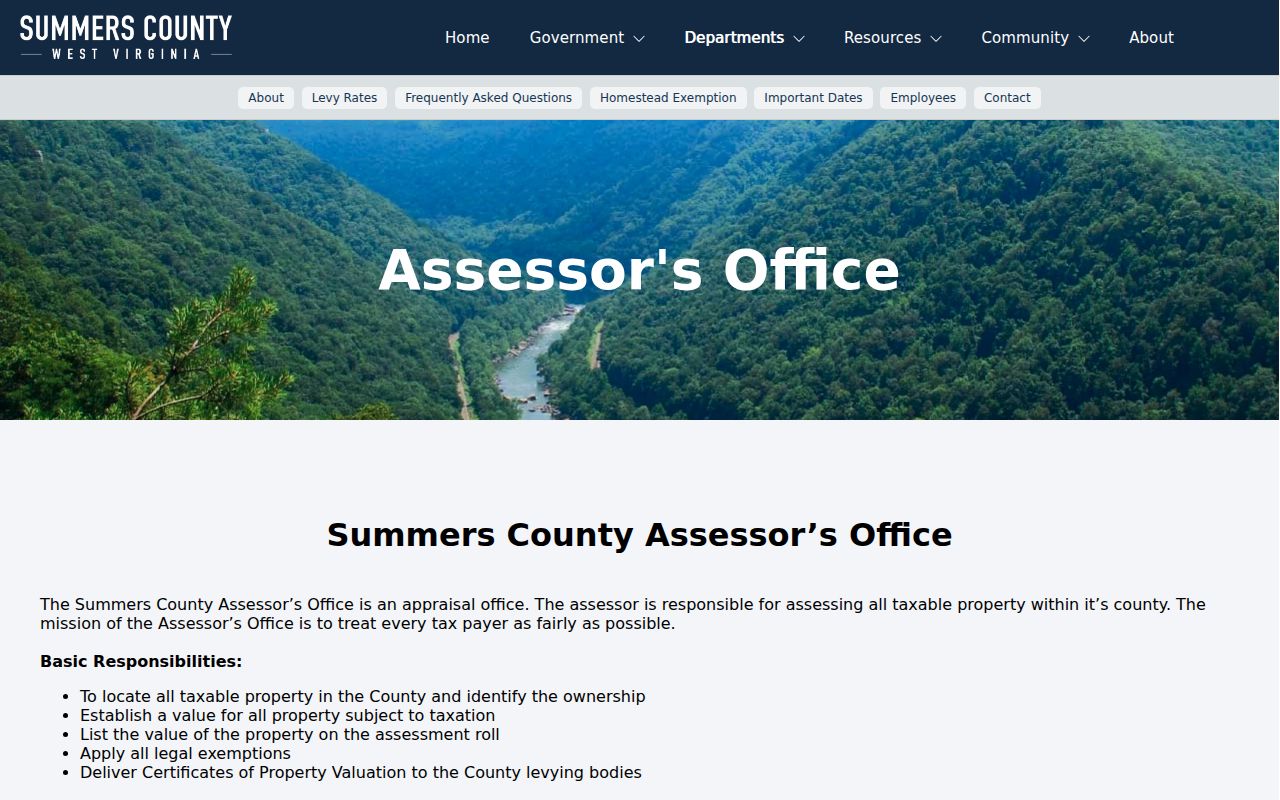
Ask the Assessor to explain a parcel-specific field or mismatch first.
Land and Improvement Fields Explain a Summers County Assessment
The statewide assessment interface includes acreage, building, and appraisal information. The viewer's parcel detail can show cost and appraised values. Separate land and improvement fields show how the tax record is assembled. They help when a parcel's total changes. They also help when a researcher compares two properties. Those properties may differ in building sizes, site conditions, or uses. These are assessment fields, nothing more. They are not a construction estimate or a promise about what a buyer would pay. The WV Property Search adds land-use and tax-class filters. The viewer links to an assessment report. Keep the parcel ID and the year shown on the record; otherwise a comparison can mix different parcels or cycles.
Find a Summers County Property Value in the Assessment Portal
Start in WV Property Search or the WV Property Viewer. Locate the parcel by address, owner, or parcel number. Select Summers County and open the detail. Note the tax class and the assessment year. Jot down the acreage, the land and building fields, and any sale or appraisal entries. The physical address may differ from the mailing address. A rural community name can be a better clue than the postal city. Keep the full parcel ID. That way the same record can be matched in the map or tax inquiry.
- Search the WV assessment application by address, owner or full parcel ID.
- Read the year, class, land and improvement values and sale or appraisal fields.
- Check the County Clerk's latest deed for the transfer date and recorded transaction reference.
- Compare parcels only after checking their use, acreage, buildings and assessment year.
- Assessed value
- The figure used by the tax assessment system under state rules.
- Market value
- A price estimate for a possible exchange; not established by the tax card alone.
- Level of assessment
- The relationship between assessed value and fair market value under the state rule.
The captured WV Property Search shows appraisal, sale, acreage, building and parcel fields.
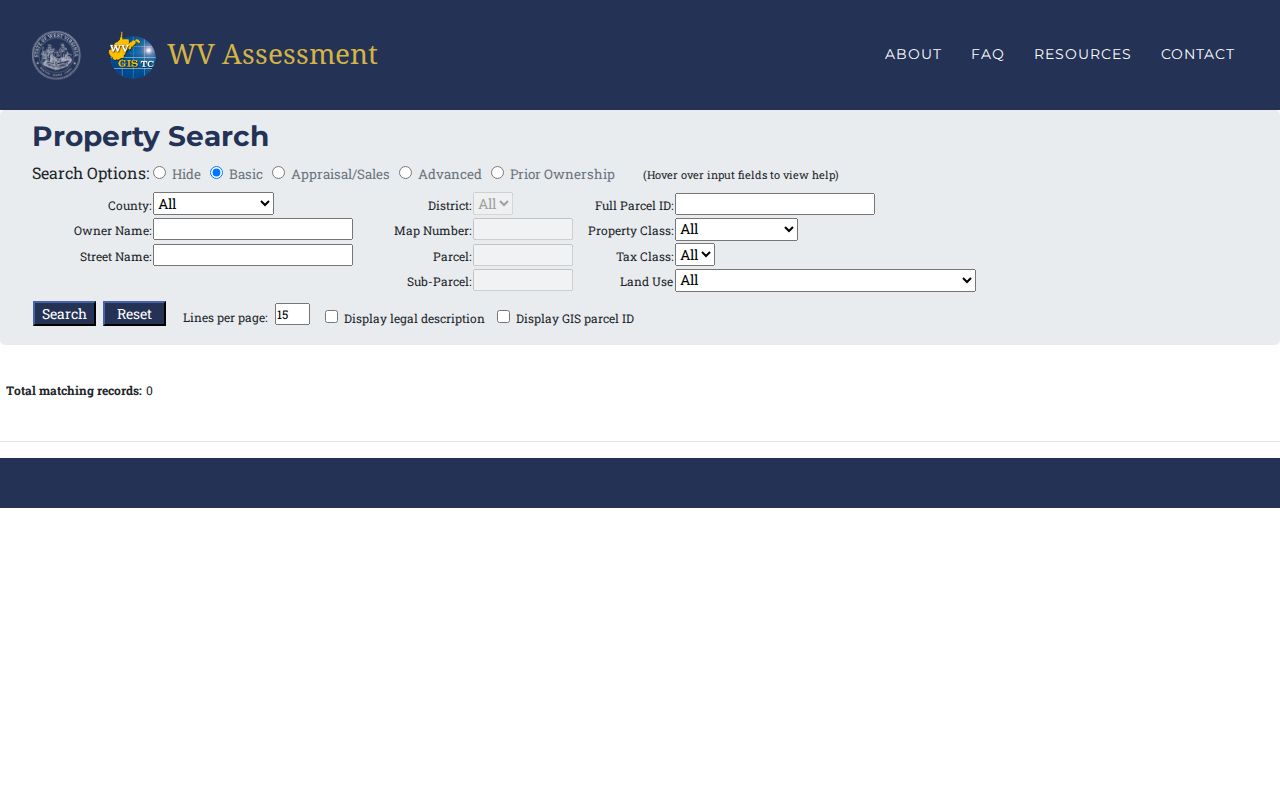
A deed price is a recorded transaction fact. Check it in context, because it does not automatically predict the next sale.
July 1 Is the Summers County Assessment Reference Date
Every value in the Summers County assessment system carries a date. The county anchors ownership and value data to July 1 for the following tax year. A parcel's assessed value is tied to that schedule. It is not tied to the day a deed records or a market estimate shifts. A fresh sale price and an older assessment figure can sit side by side without contradiction. Two more calendar markers matter. The books close on March 15. The county holds its annual appeal hearings in February. Comparing one year to the next only works when you note the effective tax year for each figure. Keep a new deed price separate from a roll update. When the number still looks wrong, the Assessor's review and appeal route is the proper fix. A private market estimate cannot substitute for the county's own procedure.
Homestead Relief Can Change the Taxable Summers County Value
West Virginia's homestead exemption can reduce the taxable assessed value of a qualifying owner-occupied home by the statutory first $20,000. That exemption changes the tax calculation only. It does not touch the property's market price or the deed's sale amount. Anyone comparing tax totals should check whether one property carries the exemption and the other does not before drawing a value conclusion. The Summers County Assessor publishes a December 1 homestead deadline and points owners to current instructions. The statute sets the amount. The county runs the filing process. The state homestead law documents the $20,000 provision.
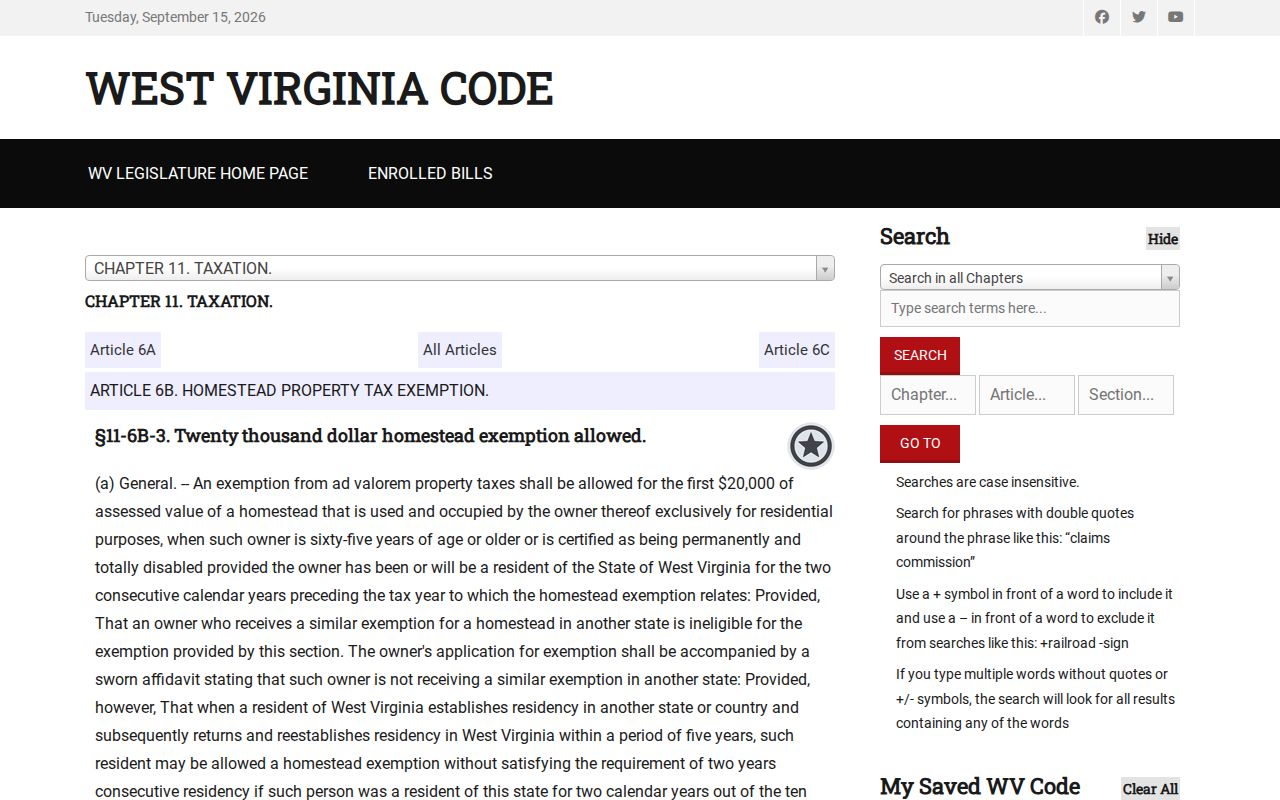
Homestead and similar exemptions do not travel with the land by default. Before relying on any taxable Summers County value, confirm the exemption status on the individual assessment record with the Assessor's office.
Compare Hinton and Rural Summers County Values with Care
Hinton stands as the only incorporated municipality in Summers County. The rest of the county mixes rural communities, park and lake areas, resort properties, and historic railroad-era buildings. Those settings shape acreage, land use, building type, and tax class. A town label cannot capture all of that. A Hinton mailing address does not guarantee the parcel sits inside the city boundary. The assessment field alone says nothing about zoning.
Compare parcels, not place names. Look at whether each property is residential, commercial, or another class. Then line up the land and improvement components from the same assessment cycle. Tourism and recreation areas bring cabins, hospitality uses, and access or easement questions. Those look nothing like a downtown lot. Matching those details is what makes a value comparison fair.
A Recorded Summers County Sale Price Is One Transaction
The assessment application can display sale information. The County Clerk's deed index leads to the recorded transfer behind it. But a recorded price belongs to one transaction on one date. It does not automatically set the current value of the property. It does not set the value of a nearby parcel either. Before drawing conclusions, check the deed and legal description to confirm the sale involved the same land. Note whether the transfer covered a whole tract, part of a larger holding, or an interest passing through an estate.
A sale-to-assessment comparison works best when the details line up. Parcel, class, acreage, building detail, and assessment year should all match. Sale prices can also carry conditions or property features the tax roll never shows. Treat the figure as evidence of a past transaction. Do not treat it as a private appraisal or a guaranteed market estimate.
July 1 Timing Can Leave a Summers County Value Behind a Sale
Summers County uses ownership and value data as of July 1 for the following tax year. A sale after that point may appear in the deed record before the next assessment roll reflects the new owner or parcel value. The Assessor's annual schedule also includes March 15 book closure and February review hearings. This calendar is important when a value comparison mixes a newly recorded deed with an older roll year.
Write down the effective year beside every figure. If a property is being reviewed for an assessment concern, contact the Assessor about the county's appointment and appeal procedure rather than assuming a deed price automatically resets the value.
Exemptions and Tax Class Affect a Summers County Value Comparison
A qualifying owner-occupied homestead can earn a statutory reduction from assessed value. The Assessor publishes a local filing route. Its deadline is December 1. That adjustment changes the taxable assessment, not what the property would fetch on the market. Two identical-looking figures can also mean very different things. The parcels may sit in different tax classes, or they may carry different land uses.
Before comparing two Summers County property values, write down the assessment year. Also record the class, acreage, land and improvement components, and any exemption shown. One record may carry a homestead entry. The other may not. In that case the taxable gap may say nothing about market demand. For a transaction needing a present-day value opinion, use a market appraisal instead.
What a Summers County Assessor Value Does Not Say
An assessed value is a tax record, full stop. It is not a promise about sale price. It is also not an appraisal prepared for a buyer, seller, or lender. The roll follows its own annual timetable. Because of that, a figure can lag behind a recent improvement, a damage event, or a shift in local demand. A deed's consideration reflects a transaction, not a valuation opinion. These records anchor solid public-record research. A sale or lending decision, though, may call for an independent licensed appraisal.
Value vs price. A Summers County assessment is assigned for taxation under the state's 60 percent rule. It is not what a specific property will sell for, and it is not a private appraisal.