
Start a Summers County Former-Owner Trail with the Latest Deed
The latest deed is the first row of a backward timeline. Its grantor was the prior owner. That party's own acquisition deed names the next link in the chain. A Summers County property may carry a modern situs address yet an older legal description tied to a lot, community, district, road, or river setting. Check the parcel description at every transfer. A same-name person or a neighboring tract can slip into the chain otherwise.
| Source | Years It Covers | Where Held | What It Shows |
|---|---|---|---|
| County Clerk online land index | 2005 to present | County-linked portal | Modern indexed transfers and other instruments |
| Summers deed index | 1871-1969 | West Virginia State Archives finding aid | Older grantor and grantee references |
| Deed and trust-deed books | Into 1903; catalog descriptions also list 1870-1904 books | County books, archives and catalog routes | Earlier recorded conveyances and security instruments |
| Preservation copies | Project completed for Summers County | County Clerk and State Archives | Digitized deed books for older research |
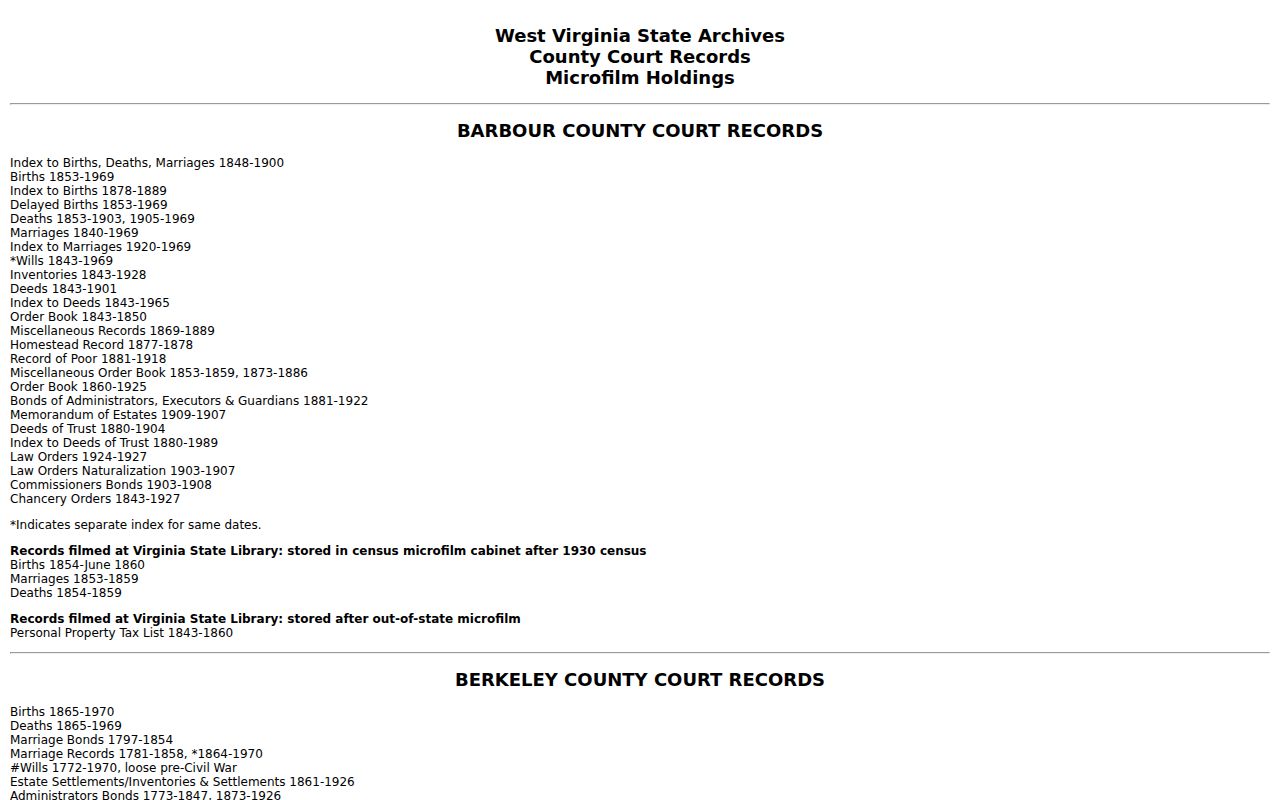
The online portal works for recent deeds. Older chains call for different sources. Once the trail passes 2005, move to the archives. The State Archives finding aid lists the local holdings of Summers County deed books, and archive dates point to named book and index series rather than a promise of searchable pages or remote images. The county's preservation entry confirms Summers County joined the digitization project.
For copy steps on a single modern instrument, see the separate Summers County deed-records guide. This page follows owners backward through time.
Where the Summers County Online Owner Chain Stops
The Clerk's online index starts in 2005. That limit reflects the linked web search, not the age of Summers County land records. The county was formed in 1871. Archive descriptions list a deed index from 1871 to 1969, with deed and trust-deed books reaching into the early 1900s. When a former-owner search crosses 2005, turn to the Clerk's deed books, the State Archives finding aid, or the FamilySearch catalog instead. Repeating a modern portal query will not help.
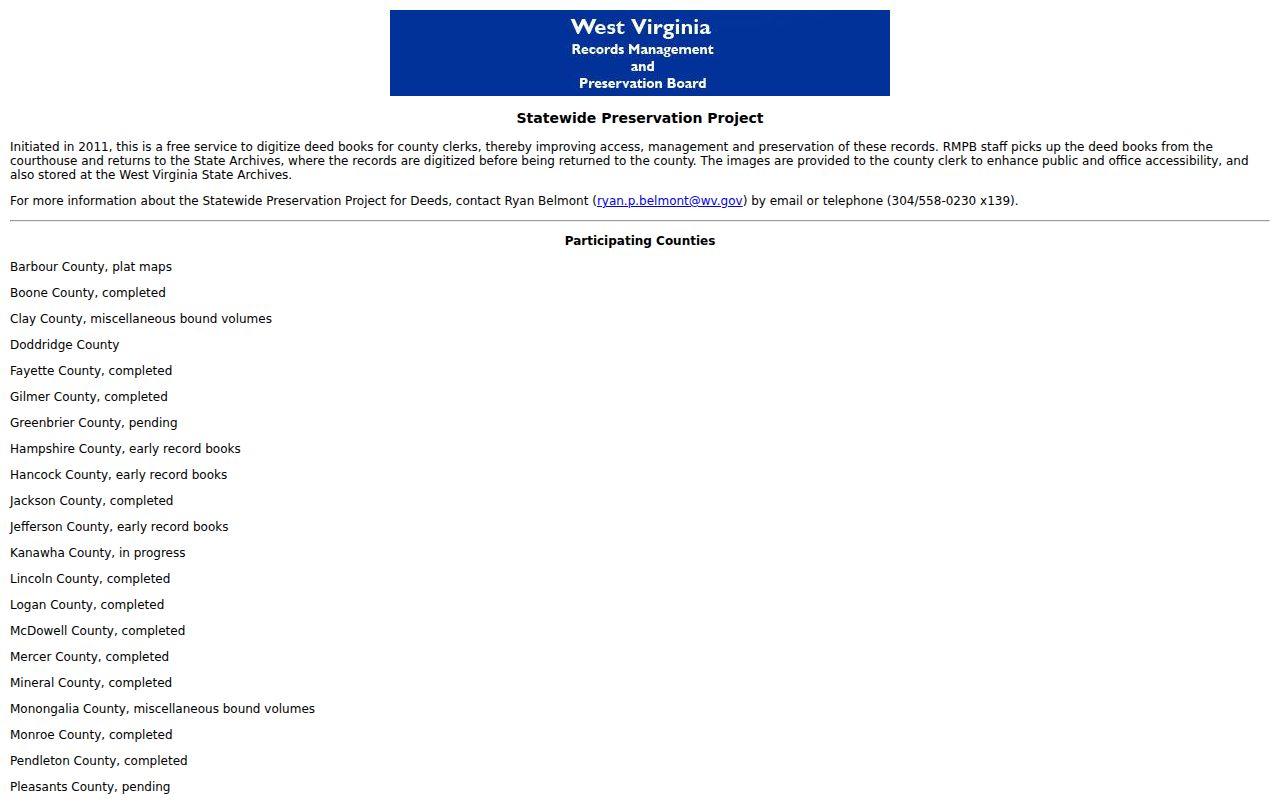
West Virginia's preservation project began in 2011 and lists Summers County as complete. Digitized deed books returned to local clerks. The State Archives kept preservation copies. The project listing confirms that work, though completeness does not mean every book has a full-text online index. Note each name, approximate year, and volume reference. Those details carry a request from the clerk portal to the archives smoothly.
No courthouse fire or catastrophic record loss marks Summers County. So an online gap is not a missing decade.
Summers County Former Owners in the FamilySearch Deed-Book Catalog
FamilySearch catalogs Summers County court minutes and related land records, listing film and digital access notes for each entry. Some images can only be opened with an account or at an affiliate library. The catalog summary describes deed books covering 1870-1904, and the State Archives finding aid lists its own index and book ranges. Two references can describe overlapping but separate series, so a citation should always name the repository, the record title, and the date span.
Search the catalog by record type and date range, then use the film or digital group reference to learn where the image can be viewed. A deed page that will not open at home may still be reachable through the library or archive. The Summers County catalog shows the finding route.
Catalog discovery opens historic records. It is no substitute for an official certified copy from the custodian.
Early Summers County Deed History in the Jumping Branch Collection
The Deeds Family Papers come from Jumping Branch. The collection holds 424 files. They include land deeds from before the Civil War, wills, legal correspondence on a property-line dispute, photographs, and family papers. That mix makes the collection strong for house history. It preserves how a family described land in words a modern index never captures. Still, it is an archive collection. It replaces neither the County Clerk's recorded deed nor a certified title record. Use it after the courthouse chain names a family. A letter may explain a disputed line or an older community name. Verify the legal transfer in the county record. The Summers County Public Library and local museums add historical context too. The library's online information lists no public reverse directory or complete resident-directory year set.
Vital Records Can Help Explain Name Changes in a Prior-Owner Chain
Marriage, death, and probate records explain name changes. An estate may explain a deed's path instead. The Summers County Clerk handles local marriage licensing and historical or local records. The state Vital Registration Office issues current certificates. West Virginia generally releases birth records after 100 years. Death, marriage, divorce, and annulment records open after 50 years, subject to statutory exceptions. Current certificates carry eligibility and identification rules, so an old ownership question does not guarantee access to a recent personal record. State certificate copies are listed at $12. The Vital Registration request page describes current request methods, identification, and fees.

The official certificate forms list shows the forms and permission material available for each record type.

Reach for a vital record only when it settles a documented name or estate question. Keep it apart from the real-property instrument, since the deed itself carries the transfer.
Hinton's Railroad Era Can Complicate a Summers County Deed Search
Hinton grew up with the railroad. That boom shaped the older buildings and the downtown historic district. A chain for an old Hinton parcel may lean on a block, rail or river reference instead of the street address in use today. The Summers County courthouse dates to 1875, just after the county formed in 1871. No courthouse fire or catastrophic deed loss marred the record. Trace early owners through the described deed books and indexes. Guessing from a gap in the modern portal is not research.
For each former owner, set the grantor and grantee names beside the legal description and any plat reference. A street renumbering can sink an address search. So can a shifted community label. The land may still sit in the records anyway. The strongest bridge runs from the current parcel to the latest deed, then to the prior grantor, then back to the archive book and page.
Walk the Summers County Deed Chain from Grantee to Grantor
Start with the latest deed you can pin down. From there, walk backward through whoever signed as grantor. Each earlier acquisition deed turns that grantor into a grantee of a still older transaction. Add a former owner only when the instrument names the same parcel. A documented partial interest counts too. That discipline matters most where old records cite a district, community or lot rather than a modern numbered address.
- Write down the latest deed's date, grantee, grantor, legal description and clerk reference.
- Search the grantor's name as a grantee to locate that owner's acquisition.
- Compare the land description, plats and parcel context before linking the next deed.
- At the 2005 online boundary, use deed books, archive indexes or cataloged microfilm.
- Grantor / grantee
- The conveying party and the receiving party on a deed.
- Chain of title
- The ordered series of transfers for one tract of land.
- Legal description
- Land-defining text that can persist when a street label changes.
Estate Transfers Can Change the Summers County Owner Chain
Not every former owner left through a plain sale. An estate can move land by fiduciary or distribution deed. The County Clerk holds wills and estates alongside the land instruments. When a chain jumps from one person to heirs, an executor or a trust, pause. Find the document that explains the change before stepping further back. A probate file can supply authority or family context. The deed still carries the real-property transfer into the land record.
Record names exactly as written. Flag alternate spellings only when a second source backs them. A trail may hold a decedent's name, an estate name and a fiduciary's name. Each appears under its own index entry. Matching surnames alone never justifies merging them.
A Jumping Branch Family Archive Adds Context to Former Owners
The Deeds Family of Summers County Papers is a family archive from Jumping Branch. It holds land deeds from before the Civil War, wills and correspondence about a property-line dispute. For a house or land-history question it is gold. It shows how earlier residents described and contested their property. It is not the county's official deed index. Treat it as context, never as a certified title record.
Turn to it after a family, community or tract emerges from the courthouse chain. Letters, photographs and family papers can explain a place-name or boundary story. The formal record may omit it. The Clerk and State Archives remain the route for actual land instruments. The Summers County Public Library and local museums add historical depth. Neither publishes a resident-directory database.
How Far Back the Summers County Owner Chain Can Reach
Summers County was formed in 1871 from four surrounding counties. Local deed descriptions and catalog holdings begin near that date. An index covers 1871 through 1969, and deed volumes run into the early twentieth century. The online clerk index stops at 2005. The State Archives and preservation collection carry far older book material. No courthouse fire or catastrophic loss struck the county. A missing web result is not proof that an earlier owner or record is gone.
Historic Hinton ownership reaches back to the railroad era. A deed might cite railroad or river geography, a community or a lot. A standardized street number may never appear. Bridge that language with the current assessor parcel. Use its latest deed and older survey or plat references. Out in the countryside, names like Jumping Branch, Pipestem or Sandstone often beat a modern postal city. These place names serve as clues.
Lawful use. Former-owner research in Summers County can support house history, title work, family research and land stewardship. Do not use a historical name or address to track, threaten or harass a living person.