
What Summers County Property Tax Records Put on the Page
Summers County gives the public one assessment route plus a separate tax inquiry. The WV Property Search and Property Viewer display parcel and appraisal details. The Sheriff's tax inquiry handles billing and payment. Keeping the two apart explains a common puzzle: why an assessed value, a tax bill, and a recorded sale price rarely match. Each office answers a different question, so knowing which layer you need comes first.
| Field | What It Shows | Where |
|---|---|---|
| Assessed value | Value basis used in the tax system | Summers County Assessor / WV assessment |
| Appraisal and land/building fields | Assessment components and parcel details | WV Property Search and Viewer |
| Homestead exemption | Eligible first $20,000 of assessed value | Apply through the Assessor |
| Tax bill and payment status | Tax account, year and billing record | Summers County Sheriff inquiry |
| Map-parcel / account / billing address | Keys and mailing details for a tax inquiry | Summers County Sheriff inquiry |
West Virginia generally assesses property at 60 percent of fair market value. That fraction does not make the assessed figure a current appraisal. Nor does it signal a likely sale price. The bill reflects the applicable levy and tax class. A deed's sale or consideration data records a separate event entirely. Read Summers County property tax records with the tax year, property class, and any exemption in view. Context, not just the number, tells you what a figure means.
The West Virginia 60 Percent Level in Summers County Assessment Records
West Virginia's ad valorem property-tax rule sets an assessment level. That level is 60 percent of fair market value. The fraction belongs to the assessment method itself. It is not a lender appraisal, a broker estimate, or a recent sale price. The WV assessment screen shows land, building, cost, and appraised fields. That helps you see how the county card describes a parcel. When comparing values, match similar land and building characteristics. Also note whether one record reflects an exemption or a different tax class.
The Summers County Assessor applies legal exemptions and maintains the assessment data. The Sheriff never sets the assessed value. That office's online inquiry covers only the billing side of the account. This division matters when a bill seems out of line with the parcel value. Check the assessment and its effective date first. Then review the tax year, account, and payment status separately. The Summers County Assessor page posts dates, appeal information, and exemption guidance for property owners.
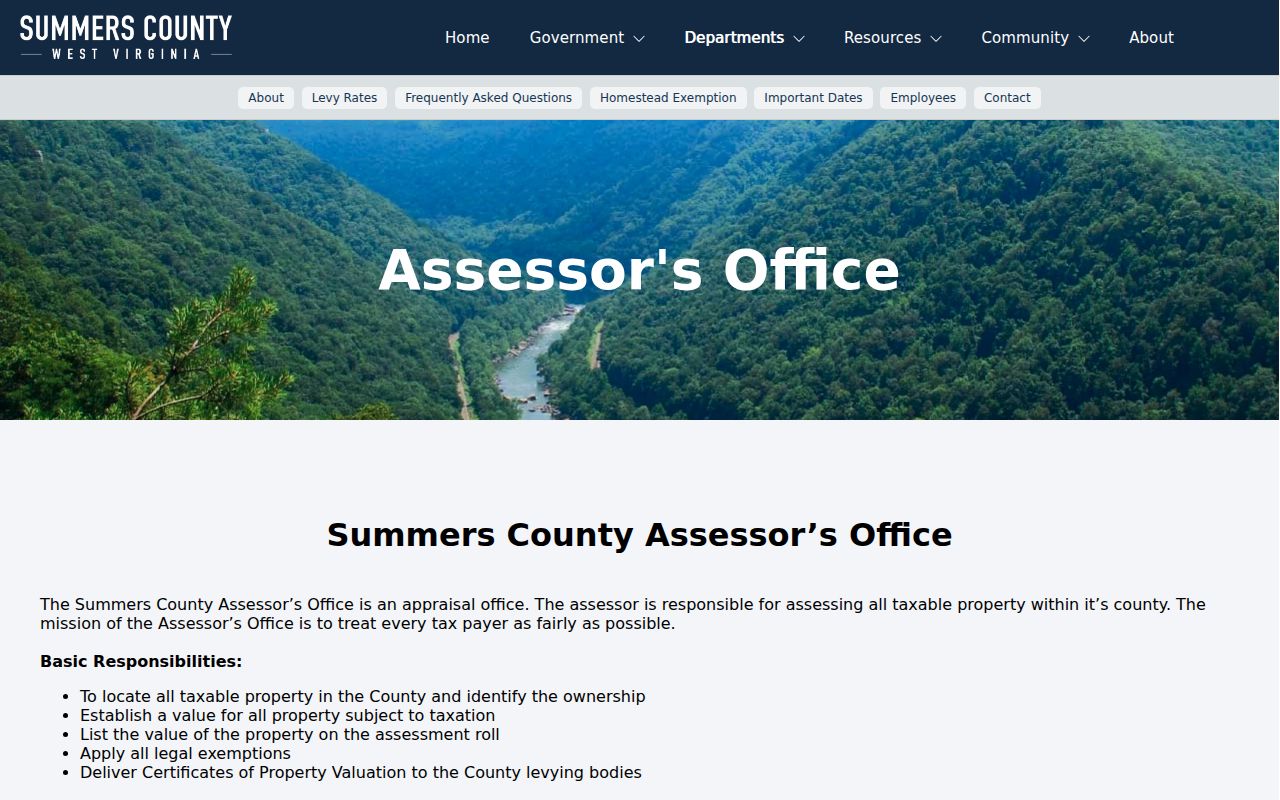
For a question about a specific value, rely on the current county posting. Then speak with the Assessor before trusting any comparison.
Summers County Homestead Relief and the First $20,000
West Virginia law grants a $20,000 homestead exemption from assessed value. It applies to a qualifying owner-occupied home. The statutory amount is not a universal rebate. It does not wipe out every part of a tax bill. Qualification, application, and the filing date the Assessor must receive all matter. The Summers County Assessor publishes a December 1 homestead deadline. Owners should ask the office about proof and current instructions well ahead of that date. The statutory page explains the exemption amount. The county Assessor page explains the local filing route. The West Virginia homestead law states the statutory rule. Only the county can confirm whether a particular owner qualifies.
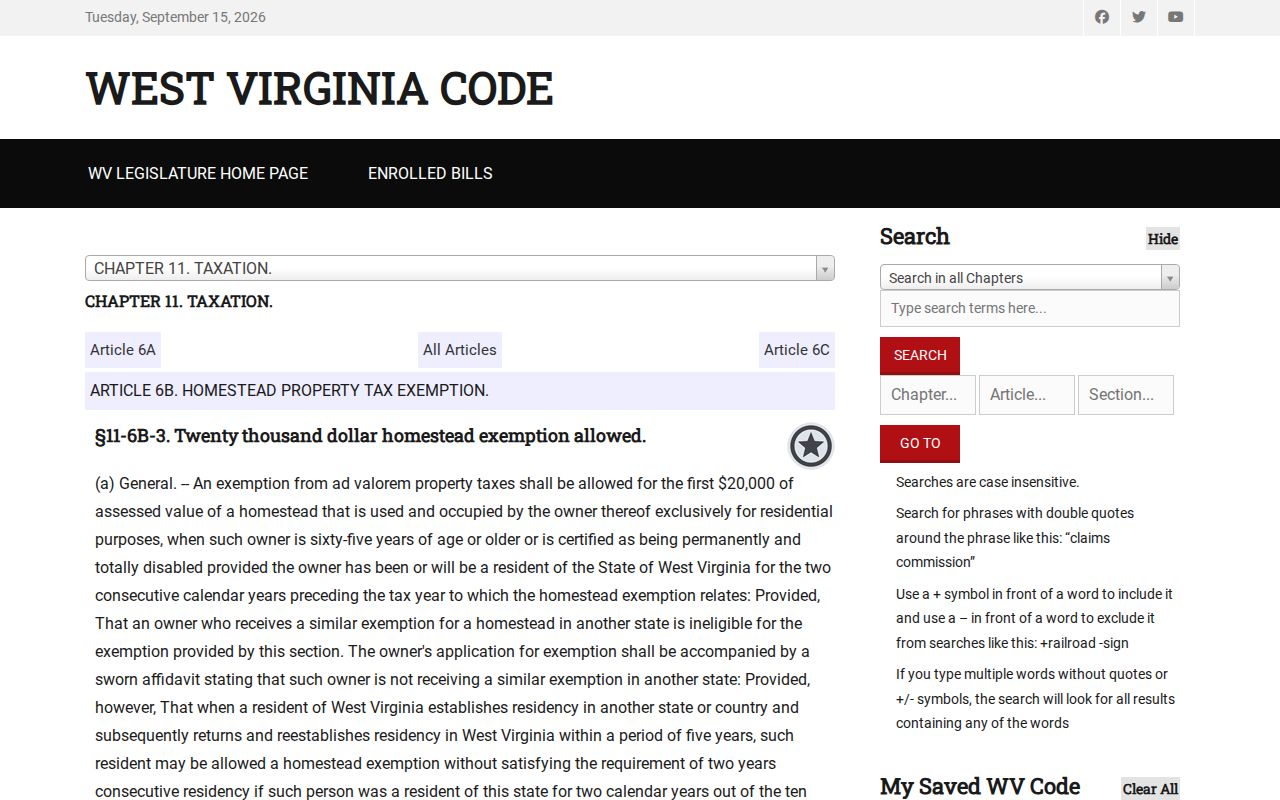
Ask the Assessor to confirm whether the exemption appears on the parcel. Also ask how a new application affects the next tax period.
How to Find a Summers County Tax Bill
The Sheriff's Tax Inquiry is the county's public route for billing and payment. It supports searches by account, map-parcel, description, and billing address. Tax-year and payment details are attached to each result. For parcel valuation and owner fields, the WV assessment application works better. If the account number is unknown, pull the parcel card first. Then carry the map-parcel or account into the Sheriff site and select the year.
- Find the parcel or account in WV Property Search if the bill clue is incomplete.
- Search Summers County Tax Inquiry with the account, map-parcel, description or billing address.
- Choose the tax year and compare the billed amount with its paid or delinquent status.
- Return to the Assessor record to review the value, class and any homestead exemption.
- Assessed value
- The value basis used by the tax system, subject to applicable rules and exemptions.
- Levy
- The tax rate adopted for a taxing purpose and applied to the tax base.
- Homestead exemption
- A statutory reduction from assessed value for a qualifying owner-occupied home.
- Tax delinquency
- An unpaid tax status shown by the billing record; check the year and custodian detail.
The Summers County tax inquiry offers account, map-parcel, tax-year, and billing address controls.
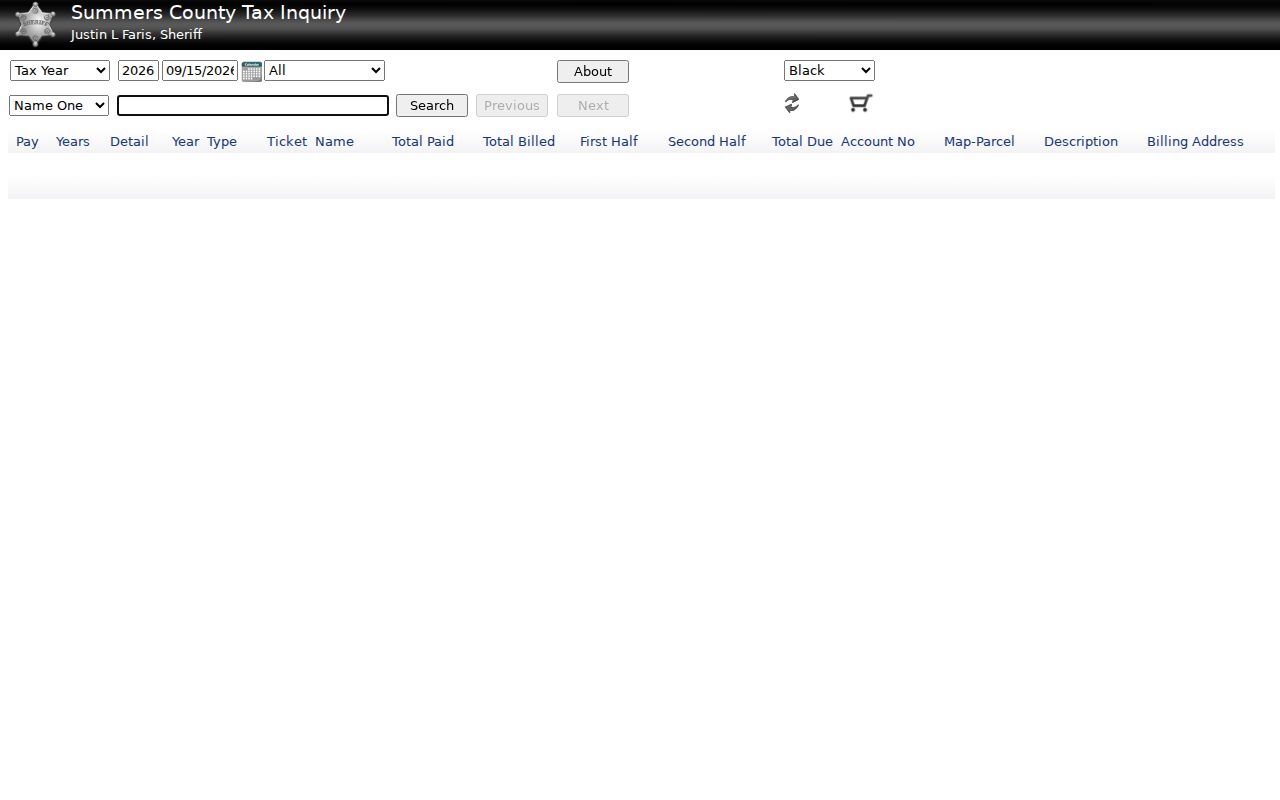
A bill display may lag behind recent payments, so confirm any time-sensitive balance with the Sheriff.
Summers County's July 1 Date and March 15 Book Close for Property Tax Records
July 1 sets the ownership and value date in Summers County. It governs the following tax year. A closing after that date may not change the next cycle's owner. The owner on the tax roll may stay the same. Tax tickets go out by July 15. The books close March 15. The Assessor's page lists January appointments ahead of February appeal hearings, so each deadline has its own place in the calendar. These dates explain a common mismatch. A recent deed and the name on an assessment record can disagree.
Keep each date tied to the record year it affects. A current owner may need to review a ticket issued in a prior cycle. A buyer might still see the seller on the roll even after a deed records. The Clerk's instrument confirms the filed transfer date. The assessment roll follows its statutory calendar instead. The tax inquiry supplies the bill and payment record for whichever year you select. Calendar details are posted on the Assessor's official page. The county site should be checked again for the current cycle.
When a bill still names a former owner, give the Assessor and Sheriff the tax year and deed date. Do not rely on the mailing label alone.
Tax Class Helps Explain Summers County Property Tax Records
West Virginia puts every parcel in a tax class. Class II, Class III and Class IV each carry different treatment. The class depends on how the land is used and where it sits. Raw value comparisons are risky. A farm outside Hinton, a small town lot, a cabin and a resort-area property in Summers County can sit in different classes. Each class carries different levy consequences. Before you treat two tax records as twins, look closer. Check the class, the land use and the acreage. Check the improvement fields and the effective year shown by the portal.
Hinton is the only incorporated municipality. A Hinton mailing address still does not settle municipal status. The Assessor's countywide assessment remains the record of authority. Any city zoning question belongs with Hinton's boundary line and current staff guidance. The tax card itself makes no zoning determination. The state Tax Division explains the assessor's role and the 60 percent assessment rule. Pair those official explanations with the parcel's actual class entry. If the classification looks wrong, contact the county.
Account and Map-Parcel Searches in Summers County Tax Inquiry
The Summers County Sheriff inquiry answers questions about a bill rather than a value. Search fields include account, map-parcel, description and billing address. The site can also display tax-year and payment details. An owner holding nothing but a street address should take one extra step first. Find the parcel in the WV Property Search. Carry the map-parcel or account number into the Sheriff's inquiry, which keeps a similar street label from pointing at the wrong tax account.
Read the year selector before trusting any amount. Check the status field too. A payment entry can belong to a prior cycle, and the tax ticket follows its own calendar apart from a newly recorded deed. If the result does not match the expected parcel, compare the billing address with the assessment situs. Then call the Sheriff through an official contact route. The custodian can explain a current balance or a corrected payment where the online view of billing records cannot.
Older Delinquent Land Records Need a Summers County Custodian Check
Delinquent-land records and old tax-sale material turn up in historic county holdings. Summers County publishes no current tax-sale calendar, and no single complete online auction list. An old delinquent entry proves nothing about a sale. Neither does a map display. Treat third-party notices with equal care. The Sheriff's current tax information shows where a parcel stands. The county office can say which year and which legal process apply.
The State Archives finding aid lists delinquent-land records among its Summers County microfilm. The record series also appear in the finding aid. That older history helps when you trace a parcel. But a past tax record says nothing about later events. A redemption, transfer or release may have followed. Compare the full deed chain with the present tax inquiry. Fake tax-sale payment instructions also circulate. Start from the official Summers County or West Virginia site. Call the courthouse number the county publishes. Ask whether the amount and payment route are official.
Class II, III and IV Shape a Summers County Tax Comparison
Classes II, III and IV sit at the heart of any West Virginia tax comparison. A parcel's class belongs in every comparison. The class, tax class and land use fields in the state application help separate one property type or location context from another. Total assessed value alone tells you little. A Hinton residential parcel, a wooded farm tract, a commercial building and a resort-area property in Summers County carry different contexts.
Suppose two tax records look out of line. Compare class first. Then compare land and building components, acreage and exemptions. The 60 percent statewide level governs assessed valuation under state rules. Local assessment details and the final bill still depend on the property record and the levy. A property tax record is not a title document.
How a Summers County Assessment Appeal Fits the Calendar
The Summers County Assessor runs an annual review path. Appointments come in January. February hearings follow before the Board of Equalization and Review. An owner who disputes the description, classification or value of a parcel should contact the Assessor early. Ask which current form and evidence the office wants. Compare the parcel against relevant assessment records. The county's published calendar places the hearing stage in February. Never assume an appeal can start at any point in the year.
Preparation should match the issue. Correct a factual parcel or improvement detail with supporting records. Argue a valuation concern with comparable property evidence instead. The Assessor's office supplies appointment details and current filing steps. A prior year's calendar should never substitute for the current page if dates or instructions change.
Appeal window. Summers County lists January appointments and February Board of Equalization and Review hearings. Contact the Assessor for the current filing deadline and required materials before the annual window closes.
The county's assessment page is the current source for appeal dates and contact instructions. A published calendar helps, but the Assessor confirms the procedure.