
What Summers County Deed Records Actually Record
The Summers County Clerk records far more than warranty deeds. The land index is broad. It spans deeds, deeds of trust, liens, releases, plats, surveys, oil and gas leases, affidavits, and foreclosure trustee reports. Each instrument does its own job. A deed moves title from grantor to grantee. A deed of trust secures a loan instead. A release shows that a recorded interest has been discharged, while a plat or survey supplies the land-description context, and an oil and gas lease or trustee report can affect particular rights or proceedings.
| Deed Type | What It Does | Common Use |
|---|---|---|
| Deed | Transfer of a real-property interest | Sale, gift, estate distribution or other conveyance |
| Deed of trust | Security instrument tied to a debt | Loan or later release of an interest |
| Lien / release | Claim against property and recorded discharge | Encumbrance research and status checking |
| Plat / survey | Mapped lots or surveyed land description | Subdivision, boundary and legal-description context |
| Oil and gas lease / trustee report | Specific mineral or foreclosure-related record | Rights or proceedings tied to the land |
A deed and a lien can involve the same parcel. They do different work. The deed names the parties to a conveyance, while an encumbrance record describes a debt or some other interest held against the land. Read the instrument type and the parties. Not every entry means a new owner. Pair Summers County deed records with the assessor parcel and a careful look at releases for stronger property research.
Summers County Deed Records Online Begin in 2005
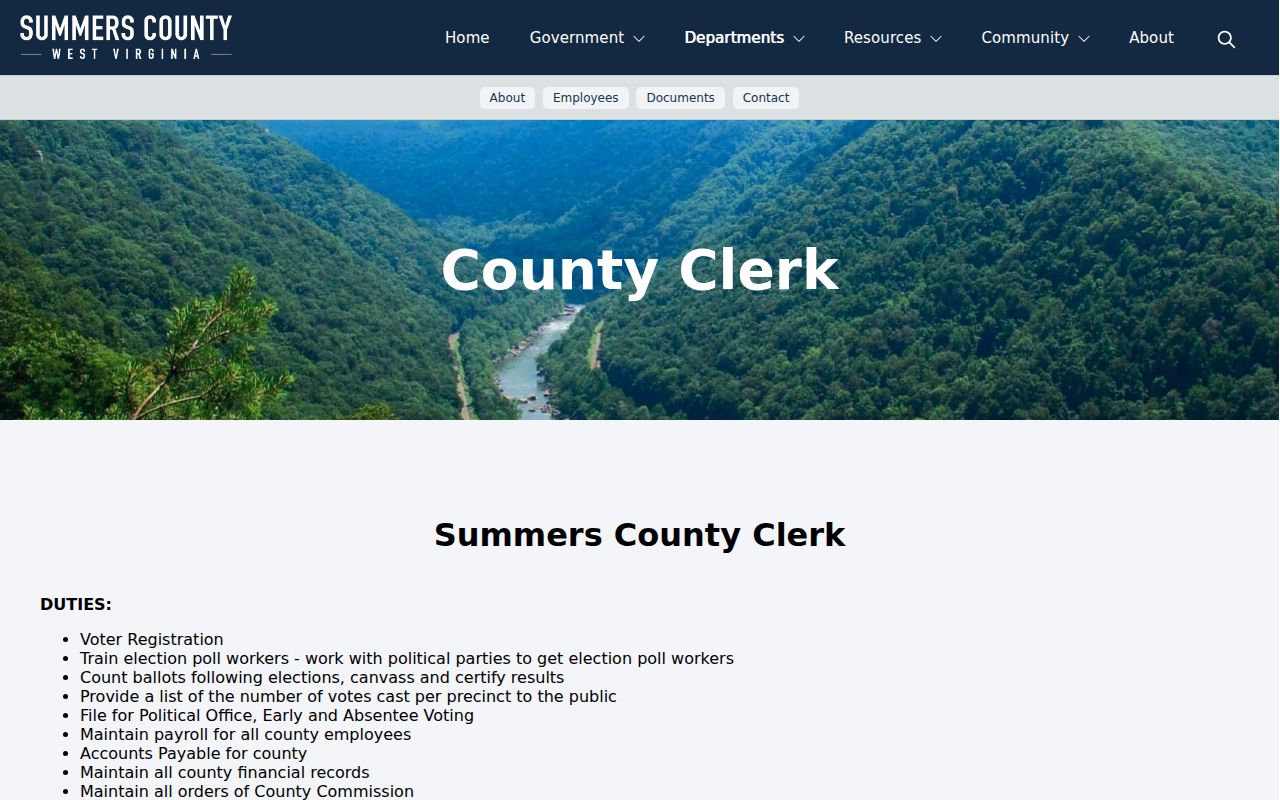
The County Clerk draws a clear line for the online land index. Coverage runs from 2005 to the present. The portal is linked from the county Clerk page. An Image link, when present, leads to the document itself. Some results carry a verified or unverified label. Images may require an account or payment. The Clerk publishes no single flat online charge, and the image workflow can differ by instrument, so confirm the current step with the office.
Treat the portal as an index. It is not a complete title conclusion. Search the grantor or grantee name from a known deed or assessment result, then check the date, document type, and reference before opening the image. When a result reads unverified, compare the displayed data to the instrument. Ask the clerk what that status means. If the portal returns nothing for an older transfer, move to the pre-2005 books and archive routes.
The Summers County land-document index is the county-linked portal, and its entries carry image links. The county Clerk page posts current instructions.
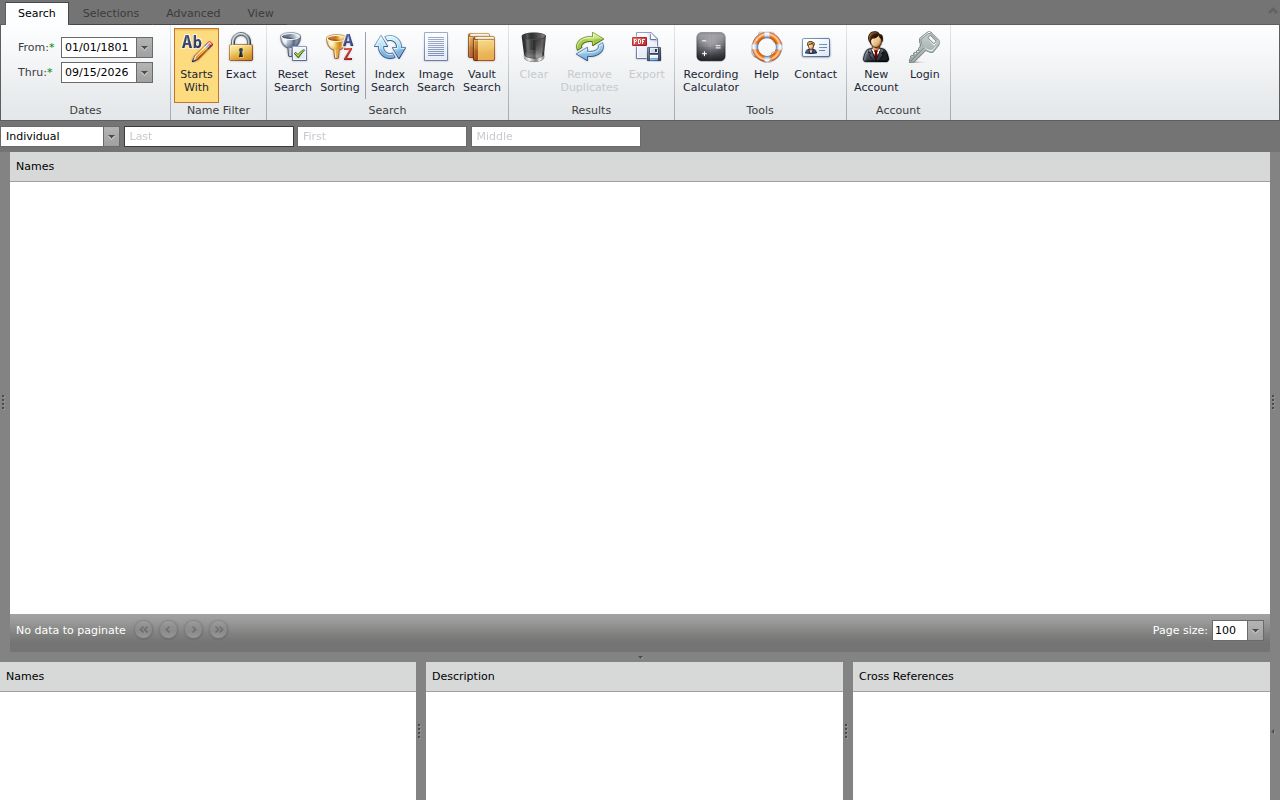
Save the complete reference before leaving the result. A party name alone may not be enough to pull the right image later.
Verified Labels and Image Links in Summers County Deed Records
The county-linked index flags entries as verified or unverified. Those labels matter. An index line is a database record, not the instrument itself. An Image link, when present, leads to the scan or its access process. Compare names and document type against the index. If the scan is missing or unclear, call the Clerk with the date, party names, and reference rather than treating the gap as proof no deed exists.
The Clerk lists its land-record categories online. Some document access needs an account or payment. The official county instructions identify the office and the current route. A good result still needs follow-up. For Summers County deed records, a certified copy may take an extra request.
Keep notes on the exact status wording. If the distinction affects a title or ownership question, ask the Clerk to explain it.
Follow the Summers County Grantor and Grantee Names
The grantor conveys the interest. The grantee receives it. In a chain-of-title search, today's grantee becomes tomorrow's grantor once that owner conveys the property again. Read each deed's date, parties, instrument type, legal description, and book-page reference. Then hunt the prior owner's grantor entry. That entry locates the deed by which the owner acquired the land. The sequence must track one parcel, not just a familiar surname.
Start with the latest instrument you can identify. Work backward from grantee to grantor. The assessor can supply a deed book and page or a legal description as a cross-reference, but only the filed instrument shows its full text. Names change through marriage, estates, or companies. Search reasonable name forms, and check probate or business records only where the deed points that way.
- Find the newest deed and note its grantee, grantor, date, legal description and index reference.
- Search the grantor as a prior grantee to find that party's acquisition instrument.
- Compare the land description on each link and continue backward only when the tract matches.
- When the chain reaches before the online coverage, use the courthouse books or archive catalogs.
- Grantor
- The party named as conveying an interest.
- Grantee
- The party named as receiving an interest.
- Chain of title
- The ordered record of transfers for the same land.
- Book and page
- A volume reference used to retrieve a recorded instrument.
Summers County Deed Records Were Included in State Preservation
West Virginia ran a Statewide Preservation Project starting in 2011. Summers County appears on its list as complete. The project digitized old deed books. It sent image copies back to the county clerks, and placed preservation copies with the State Archives. For anyone doing long-range title work in Summers County, that matters. It means a second home exists for old books. The Clerk's current web index starts in 2005, so it does not reach them.
Completion has limits, though. Digitized is not the same as searchable from the Clerk portal. The preservation project page shows the county's status. It also helps separate the older book series from the modern online index.
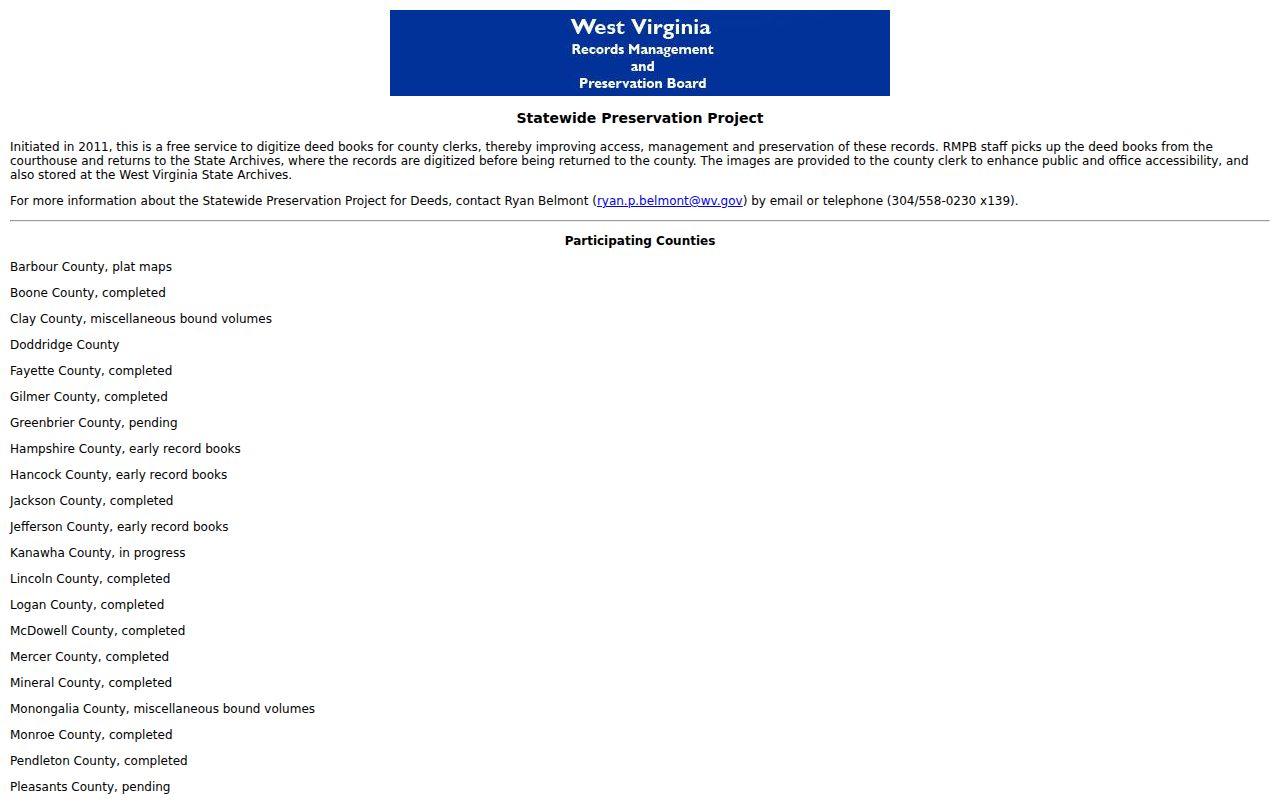
A chain of title sometimes hits a book that no online index reaches. That is where the preservation listing and the archive finding aid earn their keep, since they tell you which volumes still exist and where to request the next one.
Summers County Deed Books and the State Archives
Archive descriptions list a Summers County deed index covering 1871 through 1969. Deed and trust-deed books run into 1903. FamilySearch catalog entries describe deed books from 1870 to 1904. The ranges differ for a reason. They describe distinct record series. Assume neither one covers every deed, index volume, or trust instrument. Lean on the proper finding aid instead. The County Clerk's current online cutoff sits much later, at 2005.
The Archives finding aid reaches well beyond deeds. It covers Summers deed and trust-deed books, deed indexes, delinquent land records, plats and surveys, probate files, and court material. FamilySearch helps with discovery, including the court-minute catalog and access notes for film and digital images. Some images require sign-in or an affiliate library. Note your target names and an approximate year first. Then verify the book and page with the custodian before trusting a copy.
Start with the State Archives finding aid and the FamilySearch Summers catalog.
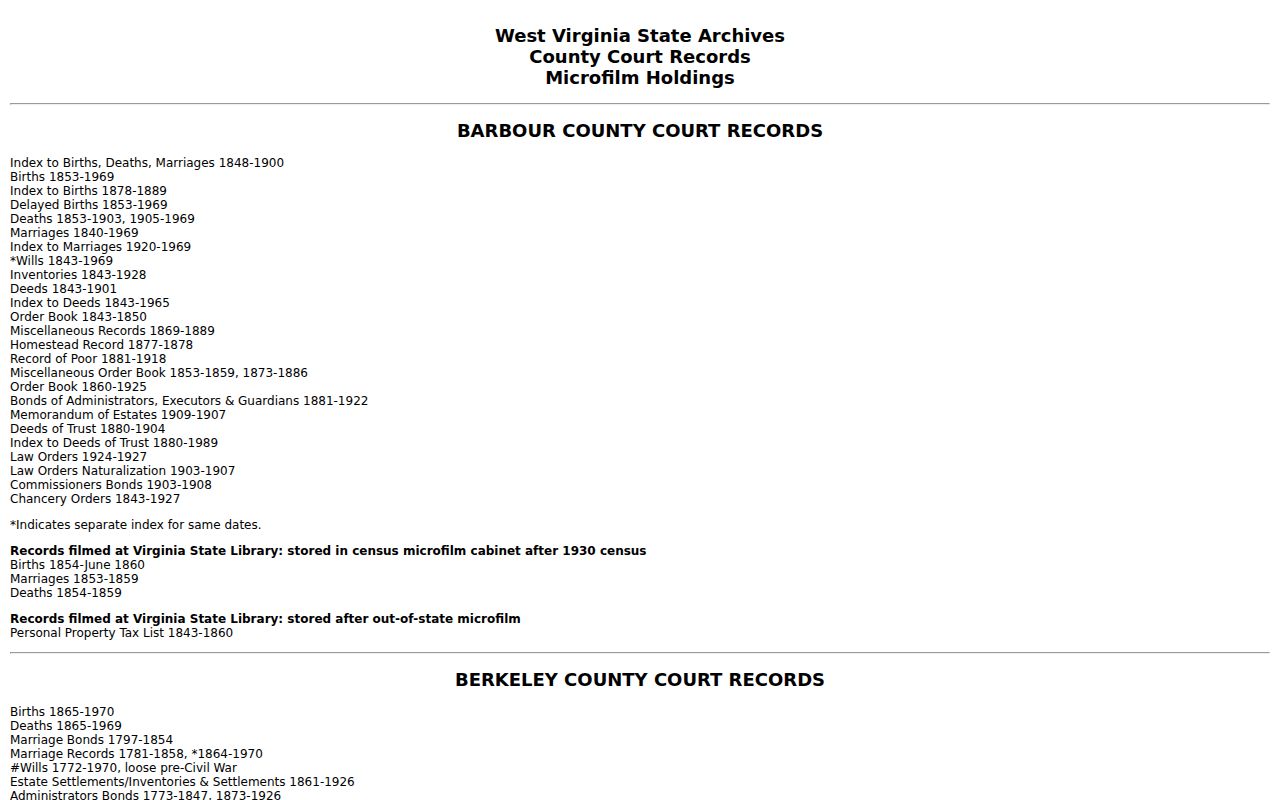
These repositories extend a deed search. They cannot replace the County Clerk's certified record when proof matters.
West Virginia Court Records Are a Separate Summers County Deed Clue
The County Clerk records judgments and foreclosure trustee reports. Still, a court case search and a land-record search are separate databases. Summers County sits in the 30th Circuit, shared with Monroe County. The statewide court-access page routes users to circuit and magistrate systems, while the local clerks of court remain the source for complete case files and certified copies. A case result can explain why a trustee report or similar instrument was recorded, but the instrument itself is still the record that counts.
The magistrate case and payment search works from exact identifiers. It takes a citation, case, or payment number, with an optional citation county. A WV.gov payment may add a $2 surcharge. A court hit is not a deed, a lien release, or an ownership transfer. Match the case parties, dates, and parcel against the County Clerk land index before tying it to a Summers County property.
The West Virginia court-access page lays out the statewide routes to both systems.
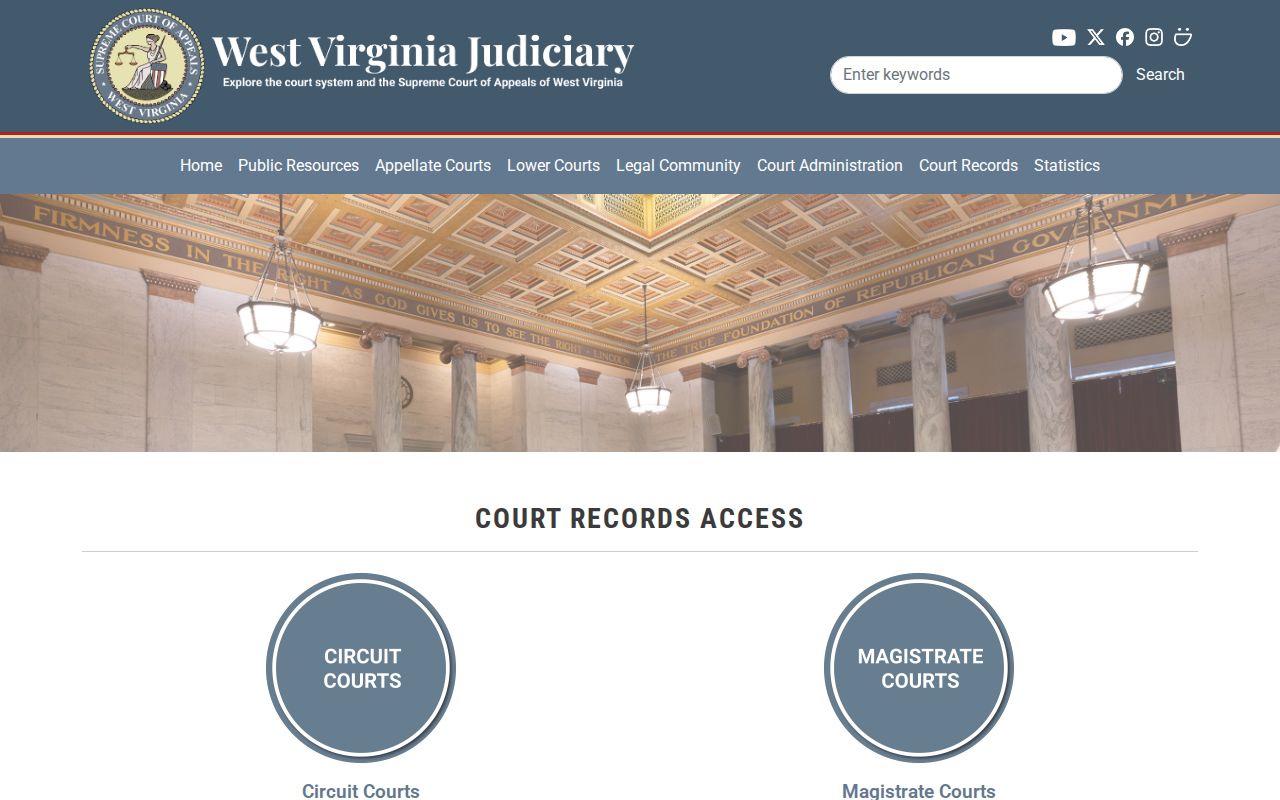
For a certified copy or a full case file, the circuit clerk and the magistrate clerk hold the real records. The state's magistrate exact-ID search displays the identifier fields a separate court inquiry starts from.
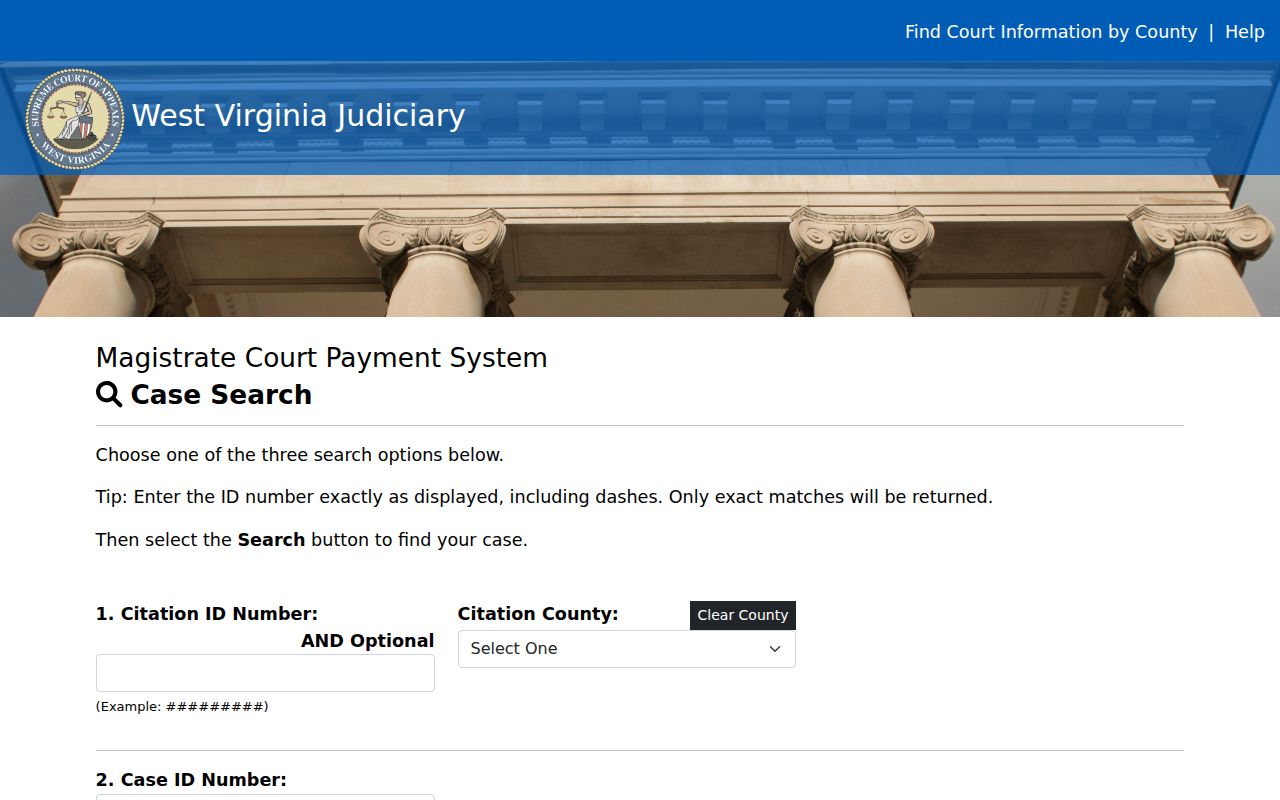
A title-history note should keep case numbers apart from deed book and page references.
Summers County Deed Books Preserve More Than a Modern Transfer List
The Summers County courthouse dates to 1875. It was built four years after the county formed from its neighbors. It joined the National Register in 1981, according to the county. That age points a researcher past the current web index, not to a lost-record gap. No courthouse fire or catastrophic destruction appears in the record. The Clerk's indexed web documents begin in 2005. Archives, though, list a Summers County deed index reaching 1871 through 1969. They also hold deed books running into the early twentieth century. Older title work in Summers County therefore reaches beyond the online property records.
A private family archive adds texture to a local property story. The Deeds Family of Summers County Papers from Jumping Branch holds 424 files. Among them are pre-Civil War land deeds, wills, and correspondence about a property-line dispute. That collection is not the official county title record. Still, it can preserve names, terms, and land questions that help explain an older place. Treat it as a history lead. Then verify each transfer through the County Clerk or the State Archives deed records.
Some county mailers imitate official deed-copy notices. They charge inflated prices for a document the Clerk provides cheaply. Before paying anything, confirm any solicitation through the courthouse contact on the official county page. Do not use a number printed only on the letter. Ask directly whether a copy or fee is official.
Requesting a Summers County Deed Copy
A deed copy request works best when the Clerk can tell instruments apart. Give the grantor and grantee names. Add an approximate recording date, the deed type, and a book-page or index reference if you have one. The Summers County Clerk sits at 120 Ballengee Street, Suite 106, Hinton, West Virginia 25951, with weekday hours from 8:30 a.m. to 4:30 p.m. The office publishes (304) 466-7104 and links to its indexed-document portal. Ask whether the deed image is viewable online or whether a counter request is required, and confirm current copying and certification charges. If you want a certified copy, say so up front; a screen image and a certified deed record do not serve the same purpose.
Skip any third-party solicitation claiming you must buy a copy through them. The county's own page describes the official process. For an older deed that predates the modern index, ask the Clerk about book, archive, or preservation-copy access instead of repeating the same portal search. Open the County Clerk contact and land-record page before calling or visiting. Confirm the courthouse copy route directly for the specific record you need.
A parcel number, the parties' names, and a date range narrow a search far better than a street address alone. That detail helps the Clerk match the right deed on the first pass.
Recorded, not guaranteed. The Summers County deed index shows records filed with the Clerk, not every possible interest in land. A deed search is not a title opinion, and a title professional must review the chain and related instruments.